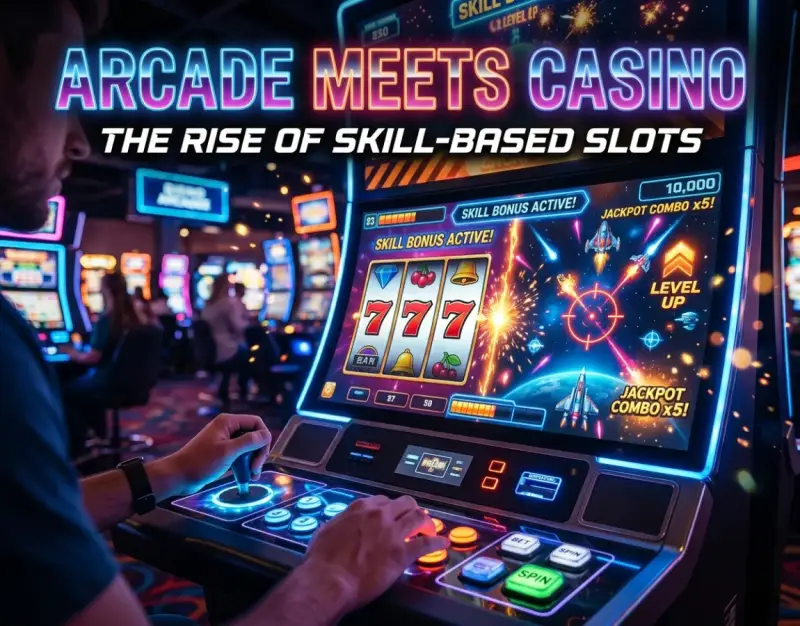
The flashing neon lights of the 1980s arcade and the steady hum of modern casino gaming floors are no longer separated by a cultural chasm. For decades, traditional slot machines relied exclusively on pure, unadulterated chance, governed by complex Random Number Generators (RNGs) and rigid mathematical models where the player’s only active role was pressing a button or pulling a physical lever. Today, however, a quiet revolution is taking place across global gaming jurisdictions. The integration of skill based slots and arcade casino hybrids represents a profound shift in how developers approach game design, consumer psychology, and interactive engagement on the casino floor.
This convergence did not happen overnight. As demographics shifted and younger generations—accustomed to the high-octane feedback loops of video games, esports, and mobile applications—entered legal gaming age, traditional reels began to lose their cultural cachet. Millennials and Generation Z demanded more than passive entertainment; they sought agency, strategy, and a sense of mastery. In response, forward-thinking manufacturers began embedding interactive slot features into cabinet architectures, borrowing time-tested mechanics from first-person shooters, puzzle solvers, and endless runners. This evolution has transformed static gambling devices into dynamic arenas where player dexterity and tactical decision-making can directly influence the gaming experience.
At the bleeding edge of this trend lies sophisticated igaming tech that blurs the line between gambling and video gaming. Developers are no longer just math modelers; they are level designers, narrative architects, and user-experience engineers. Yet, this blending of worlds introduces complex regulatory challenges, shifting payout dynamics, and distinct psychological triggers for players. In this comprehensive guide, we will unpack the mechanics, strategies, case studies, and future trajectory of how the arcade met the casino and fundamentally changed the modern gambling landscape forever.
Foundational Principles and Mechanics of Hybrid Gaming
Understanding the Shift from Pure RNG to Hybrid Mathematics
To comprehend how skill-based elements function within a modern slot machine, one must first understand the bedrock of traditional casino math. In a standard slot, the outcome of every spin is determined entirely by an RNG at the microsecond the spin button is pressed. The reels, animations, and sound effects are merely theatrical presentations of a pre-determined mathematical result. By contrast, hybrid machines introduce a dual-layer architectural model where traditional RNG spins dictate the baseline entry into a bonus round, but the execution of that bonus round relies on player input.
This dual-layer approach requires a delicate mathematical balancing act by game mathematicians. Regulatory bodies, such as the Nevada Gaming Control Board and the UK Gambling Commission, mandate that any game offering a return-to-player (RTP) percentage must clearly delineate what portion of the payout is governed by chance and what portion is governed by skill. If a player performs exceptionally well at an arcade-style bonus round, their payout increases; if they perform poorly, their payout drops to a regulatory-compliant floor. Understanding this variance is crucial, much like evaluating The Ultimate Volatility Matrix: Matching Your Personality to the Right Slot to determine your ideal risk profile across different machine types.
The Anatomy of an Arcade-Casino Cabinet
Physical hardware has undergone a radical redesign to accommodate these interactive elements. Traditional button decks featuring simple spin, max bet, and denomination selectors are being replaced or augmented by arcade-style joysticks, trackballs, multi-touch panels, and high-definition steering wheels or gun controllers. These physical interfaces change the ergonomics of play, inviting longer physical engagement and standing postures reminiscent of classic arcade cabinets.
Furthermore, these cabinets utilize modular processing units capable of rendering real-time 3D graphics that rival home gaming consoles. Dual-screen setups are standard, with the lower screen housing touch-based interaction zones where players slice targets, navigate mazes, or time precise jumps. This hardware shift requires casino operators to rethink floor layouts, positioning these high-energy, noisy, and visually arresting cabinets in high-traffic zones designed to draw crowds and encourage spectator engagement.
Regulatory Frameworks and the Definition of Skill
One of the most complex hurdles facing the adoption of arcade-casino hybrids is the legal definition of gambling versus gaming. In many jurisdictions, a game where the outcome is determined predominantly by skill rather than chance falls outside the legal definition of a slot machine, moving into the realm of amusement with prizes (AWP) or skill-based gaming competitions.
To remain compliant, manufacturers utilize a "hybrid compliance model." The base game—the spinning reels that award entry into the skill feature—remains strictly RNG-based and meets all traditional slot machine auditing standards. The skill element is strictly confined to the bonus round or secondary feature, where the player's ability can alter the payout within a tightly regulated window (e.g., shifting the RTP from 92% to 98% based on optimal play). This ensures that while practice and skill improve the player's return, the house still maintains its mathematical edge over a statistically significant sample size.
Designing the Player Journey: Mechanics and Interfaces
Integrating Direct-Control Bonus Rounds
The crown jewel of any arcade-casino hybrid is its direct-control bonus round. Rather than watching a passive animation of a character opening chests, players are thrust into active gameplay. For instance, a player might trigger a bonus round that transforms the screen into a side-scrolling platformer. As their character runs across the screen, the player must press a jump button at precise intervals to clear obstacles and collect coin multipliers.
This active participation triggers a powerful psychological response known as the "illusion of control." Even though the underlying math model tightly controls the range of possible outcomes, the physical act of timing a button press or steering a vehicle creates deep cognitive investment. Players feel responsible for their successes and failures, which dramatically elevates emotional engagement compared to passively watching reels spin.
Reflex-Based vs. Strategy-Based Hybrid Models
Not all skill elements are created equal; developers generally split these mechanics into two distinct categories: reflex-based and strategy-based. Reflex-based features—such as shooting galleries, rhythm games, or obstacle navigation—test hand-eye coordination and reaction time. These appeal strongly to younger, gaming-native demographics who rely on fast-twitch responses honed over years of playing video games.
Conversely, strategy-based hybrids—such as puzzle-matching games (similar to Bejeweled or Candy Crush), tower defense miniatures, or resource-management simulations—appeal to a broader demographic. These games reward patience, pattern recognition, and tactical foresight. By offering both styles, manufacturers can target different player segments while maintaining the core revenue generation of a traditional slot machine.
Dynamic Difficulty Adjustment and Fairness
A critical engineering challenge in designing these hybrids is managing player skill disparity. If a game is too difficult, casual gamblers will feel cheated and abandon the machine. If it is too easy, skilled gamers will consistently extract the maximum allowable RTP, eroding the casino's operating margin.
To solve this, advanced igaming tech incorporates Dynamic Difficulty Adjustment (DDA) algorithms. These algorithms monitor the player's historical performance, adjusting the speed of targets, the width of jump gaps, or the time window for successful inputs in real time. This ensures that a novice player still enjoys a smooth, entertaining experience while a master gamer is appropriately challenged without breaking the game's strict financial parameters.
The Psychological Impact and Player Demographics
Bridging the Generational Divide on the Casino Floor
For decades, the average age of the land-based casino player has steadily crept upward. Traditional reel spinners are aging out, and traditional table games struggle to capture the attention of digital natives who prefer immersive, interactive entertainment. Arcade-casino hybrids serve as a vital demographic bridge.
When younger adults walk onto a modern casino floor, rows of identical spinning reels often hold little appeal. However, a cabinet featuring a recognizable arcade aesthetic—complete with joysticks, vibrant pixel art or high-end 3D graphics, and competitive leaderboards—immediately commands attention. This design philosophy successfully captures foot traffic from younger demographics, converting arcade nostalgics and casual gamers into active casino patrons.
The Illusion of Control and Dopamine Loops
Traditional slots rely heavily on variable-ratio reinforcement schedules, keeping players engaged through unpredictable rewards. When you add skill elements to the mix, you introduce an entirely new layer of neurochemical feedback: the dopamine rush of personal achievement.
When a player successfully executes a difficult maneuver in a skill-based bonus round and secures a large win, their brain attributes that success not just to luck, but to their own competence. This drastically increases emotional attachment to the game. However, this dynamic also brings inherent risks, particularly when players experience The Dark Side of Bonus Rounds: Why Dead Spins Outnumber Big Wins, as the frustration of failing a skill check after a long dry spell can lead to acute player burnout.
Social Dynamics, Tournaments, and Leaderboards
Arcades were historically social hubs where players gathered around cabinets to watch high scores being set. Modern hybrid slots are reviving this communal atmosphere through integrated tournament software and persistent leaderboards.
Players can now log in using digital wallets or player club cards, competing against others across a casino network or even globally for daily prizes and bragging rights. This gamification transforms solitary gambling into a social, competitive sport, encouraging repeat visits and longer dwell times on the casino floor.
Real-World Case Studies and Implementation Scenarios
Case Study 1: The Success of Skill-Based Shooting Galleries
One of the earliest and most successful deployments of arcade-casino hybrids involved adapting classic light-gun arcade games into casino cabinets. In these implementations, players spun the reels to earn "ammunition" and entry into a bonus round where they used a physical gun controller to shoot on-screen zombies, aliens, or targets.
The Strategy: The base game maintained a standard 93% RTP, but the bonus round allowed players whose accuracy exceeded 85% to unlock multiplier tiers that pushed their overall session payout efficiency significantly higher. The Outcome: Casinos reported a 40% increase in time-on-device for players aged 21–35 compared to traditional slots on the same floor. Furthermore, coin-in metrics surged because players were highly motivated to keep spinning to earn higher-tier ammunition types for the bonus round.
Case Study 2: The Pitfalls of Overly Complex Puzzle Hybrids
Not all hybrid experiments have resulted in success. In an attempt to capture the massive casual puzzle market, several manufacturers launched slots that required players to solve complex matching puzzles within a strict 30-second timer to determine their bonus payout.
The Strategy: Deep strategic puzzle mechanics designed to appeal to hardcore puzzle enthusiasts. The Outcome: The experiment largely failed in standard casino environments. Casual gamblers found the puzzles too stressful and confusing, leading to high abandonment rates and complaints that the game felt like "work" rather than relaxation. Conversely, skilled puzzle players realized the house edge was still present and preferred playing mobile apps where they could win cash prizes without casino house margins. The lesson learned: complexity must be carefully balanced with intuitive, pick-up-and-play mechanics.
Critical Mistakes in Hybrid Slot Development and How to Avoid Them
Designing arcade-casino hybrids is fraught with engineering and conceptual pitfalls. Below are the five most costly mistakes developers and operators make, along with actionable countermeasures.
-
Alienating Traditional Slot Players
The Mistake: Removing all traditional visual cues, reels, and familiar audio prompts in favor of pure video game aesthetics, causing traditional slot players to walk past the machine.
The Countermeasure: Maintain a familiar base game mechanic (such as classic 5x3 reels) that transitions seamlessly into the arcade bonus round, ensuring traditionalists feel comfortable while progressive players get their interactive fix. -
Ignoring Regulatory Skill-Cap Limits
The Mistake: Creating a skill game where a master player can reduce the house edge to zero or negative territory, forcing operators to pull the machines off the floor.
The Countermeasure: Implement strict mathematical capping on skill contributions, ensuring that even with 100% perfect play, the machine operates within legally mandated minimum RTP thresholds. -
Creating Steep Learning Curves
The Mistake: Requiring extensive tutorials or deep gaming knowledge to understand the bonus round controls, intimidating casual casino patrons.
The Countermeasure: Design intuitive interfaces using touch controls or simple one-button mechanics that take less than five seconds to understand, echoing the design philosophy of successful mobile games. -
Failing to Balance Payout Transparency
The Mistake: Hiding how player performance affects the final payout, leaving users feeling cheated when they perform well but receive low rewards due to underlying RNG constraints.
The Countermeasure: Utilize clear, real-time UI meters that visually show how accuracy, speed, or strategy directly translates into multiplier accumulation during gameplay. -
Neglecting Ergonomic and Hardware Durability
The Mistake: Using fragile consumer-grade buttons, joysticks, or touchscreens that break down under the heavy, physical use typical of a 24/7 casino floor.
The Countermeasure: Invest in commercial-grade arcade components rated for millions of actuations, ensuring high uptime and low maintenance costs for casino operators.
Comprehensive Comparison Table: Traditional Slots vs. Arcade-Casino Hybrids
| Feature / Metric | Traditional Slot Machines | Arcade-Casino Hybrids |
|---|---|---|
| Core Determination | 100% Random Number Generator (RNG) | RNG Base Game + Skill/Reflex Bonus Round |
| Player Agency | Minimal (Spin, Stop, Bet Sizing) | High (Direct control, timing, strategy) |
| Target Demographic | Traditional gamblers (Ages 45+) | Digital natives, gamers, millennials (Ages 21–40) |
| Interface Hardware | Standard button deck, touchscreen | Joysticks, trackballs, light-guns, multi-touch |
| Volatility Profile | Fixed mathematical variance models | Dynamic variance influenced by player skill |
| Social Engagement | Solitary play experience | Networked leaderboards, tournaments, spectators |
Frequently Asked Questions (FAQ)
Are skill-based slot machines legal in all jurisdictions?
No, the legality of skill-based slots varies significantly by jurisdiction. While progressive gaming markets like Nevada, New Jersey, and various European regulatory bodies have established clear frameworks for hybrid machines, many state and international jurisdictions still enforce strict prohibitions against altering gambling outcomes based on player proficiency. Operators and developers must secure jurisdiction-specific certifications before deployment.
Can a skilled player consistently beat arcade casino hybrids?
No. Even in games with heavy skill elements, the underlying mathematical framework is designed to preserve a house edge over the long term. While a highly skilled player can maximize their RTP (Return to Player) by reaching the upper limits of the skill bonus payout, the base game and strict payout caps ensure that the casino maintains its statistical advantage over millions of plays.
Do I need gaming experience to win on hybrid slot machines?
Not at all. Most hybrid machines are specifically engineered with accessible mechanics where the base game is played exactly like a traditional slot. Even during the arcade bonus rounds, introductory levels are forgiving, and many machines incorporate adaptive difficulty systems to ensure that casual players still receive payouts and entertainment value without requiring professional gaming reflexes.
How do these machines affect the player's Return to Player (RTP) percentage?
Unlike traditional slots with a fixed RTP (e.g., exactly 95.0%), hybrid machines often feature a variable RTP range (e.g., ranging from 90% for unskilled play up to 97% for mathematically optimal play). Your actual return depends directly on your performance during the interactive skill elements, rewarding practice and mastery with higher potential returns.
Are these games appearing in online casinos or only land-based venues?
While arcade-casino hybrids originated on physical casino floors to revitalize floor spaces, the explosive growth of online iGaming tech has driven developers to port these mechanics to digital platforms. Today, online operators increasingly feature titles inspired by mechanics seen in Fresh Spotlight: Fantasy RPG Slots That Introduce Level-Up Progression Systems, bringing interactive skill and progression elements directly to desktop and mobile browsers.
Strategic Roadmap and Final Takeaway
The convergence of arcade culture and casino gaming is far more than a passing design fad; it represents a fundamental evolution in how interactive entertainment and gambling intersect. As hardware capabilities expand, processing power increases, and new generations demand deeper engagement, the boundary between the arcade cabinet and the slot machine will continue to dissolve.
For game developers, casino operators, and industry investors, the mandate for the next two to five years is clear: balance innovation with accessibility. The most successful implementations will be those that honor the comforting familiarity of traditional reel spinning while delivering genuinely thrilling, skill-rewarding interactive experiences. By mastering this delicate equilibrium, the industry can secure its relevance for decades to come, ensuring that the lights of the arcade will continue to shine brightly on the modern casino floor.
Be the first to share a gentle reflection on this story.